
South Carolina lawn chemical and pesticide rules homeowners should know
By Petra Kowalski · Updated 2026-07-06
This is general information, not legal advice. Pesticide regulation involves state law, product-specific label requirements, and sometimes local rules, and specifics change over time. For anything beyond general awareness, contact South Carolina’s pesticide regulatory agency directly or consult the product label, which is a legally binding document.
Lawn chemical use sits at the intersection of a few different rules: what a product’s label legally requires, what license a commercial applicator needs to apply it for hire, and what protections exist for neighbors, kids, and pets. Most homeowners never need to dig into the details, but it’s worth knowing the basics before hiring a chemical lawn care program or handling treatments yourself.
Commercial applicators generally need to be licensed
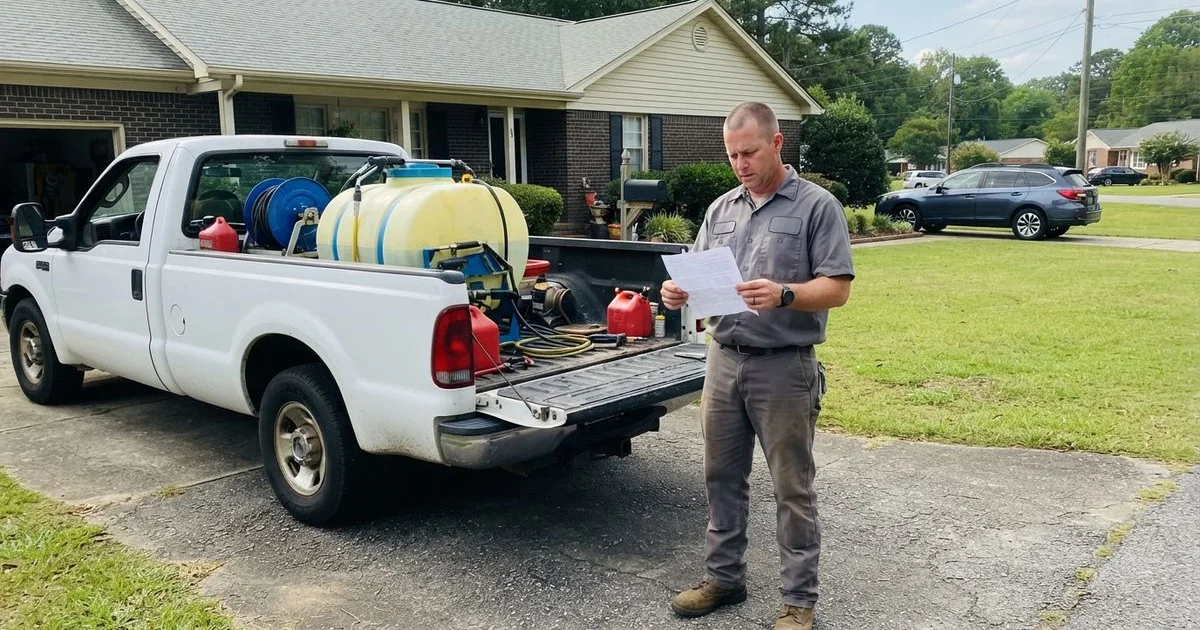
Businesses that apply pesticides for hire in South Carolina are generally required to hold applicator certification through the state’s pesticide regulatory program, which covers categories like ornamental and turf pest control. This exists to make sure anyone applying chemicals professionally understands proper handling, application rates, and safety protocols. It’s reasonable, and normal, to ask a lawn care company you’re considering whether their technicians are licensed applicators before signing up for a fertilization or weed control program.
The product label is the actual rule
Every pesticide product sold legally carries a label that specifies exactly how, where, and at what rate it can be applied, and that label functions as a legally enforceable document, not just a suggestion. This is true whether a homeowner or a licensed professional is doing the applying. If you’re handling any of your own lawn chemical applications, reading the label fully, not just the marketing panel, is the actual compliance requirement.
Restricted-use products require certification either way
Most general-use lawn and garden products don’t require special licensing for a homeowner to buy and apply on their own property. Restricted-use pesticides are a different category, requiring certification to purchase or apply regardless of whether you’re a homeowner or a business, because of higher toxicity or environmental risk. These are uncommon in typical residential lawn care but worth knowing about if a company or product ever mentions restricted-use status.
| Who’s applying | General-use products | Restricted-use products |
|---|---|---|
| Homeowner, own property | Generally allowed without a license | Requires certification |
| Commercial lawn care company | Requires applicator license/certification | Requires certification |
Questions worth asking a lawn care company
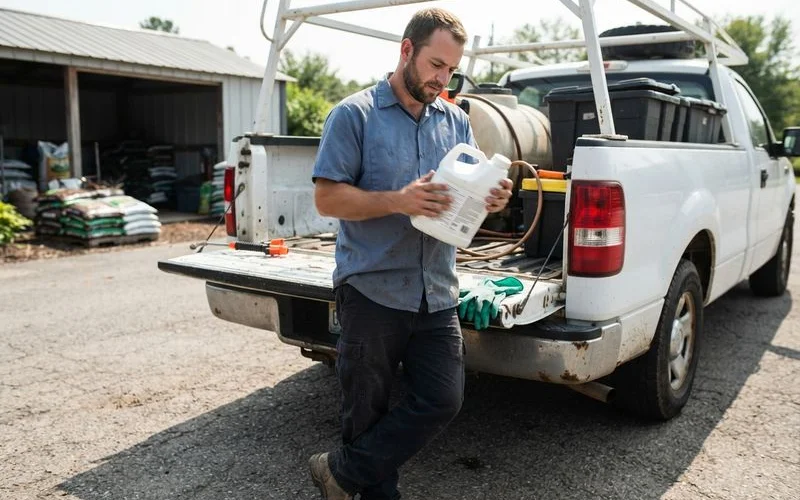
Before signing up for a chemical treatment program, it’s reasonable to ask what products are used, whether the technicians applying them are licensed, and how the company handles notification if you have kids, pets, or a sensitivity you want factored into timing. A company confident in its process should have straightforward answers to all of these without hesitation.
HOA and neighbor considerations
If you live in an HOA community, check whether the association has its own rules about lawn appearance or treatment types, since some communities have standards around weed control or turf health that go beyond state pesticide law. It’s also worth a quick, friendly conversation with immediate neighbors if you or a household member has a known chemical sensitivity, so everyone understands why timing or advance notice matters to you specifically.
Record-keeping is worth the small effort
Keeping a simple record of what’s applied to your lawn and when, even just saving the invoice or service note from each visit, is useful if you ever need to reference it later, whether that’s for a health question, a landscaping change, or comparing programs between companies. Most established lawn care providers already keep this on file and will share it if you ask, but having your own copy means you’re not relying on someone else’s records.
If you’d rather avoid synthetic chemicals altogether, our eco-friendly & organic lawn care category lists providers who focus on lower-chemical or fully organic approaches, or browse the full directory for a broader range of companies. Whichever direction you go, request quotes to compare providers, and see our methodology for how we evaluate the companies listed here.
FAQ
- Do lawn care companies need a license to apply pesticides in South Carolina?
- Commercial applicators generally need to be licensed and certified through the state's pesticide regulatory program to apply most pesticide products for hire. Ask any company you're considering to confirm their applicator license before you sign up for a chemical treatment program.
- Can homeowners apply their own lawn pesticides without a license?
- Homeowners can generally use general-use pesticide products on their own property without a commercial license, but restricted-use products require certification regardless of who's applying them. Read product labels carefully, since they're legally enforceable instructions.
- Do I have to be notified before a neighbor's lawn service applies pesticides?
- Notification requirements vary and are often tied to specific circumstances rather than a blanket rule. If you have concerns, like a health sensitivity, it's reasonable to ask a neighbor's lawn company directly about their notification practices.
- Are organic lawn care products regulated the same way?
- Even organic and minimum-risk products can be subject to labeling and use requirements, though the licensing bar for commercial application is often lower than for synthetic pesticides. Ask any provider what's actually in their organic program rather than assuming the organic label means unregulated.