
Lawn mowing pricing: weekly vs biweekly vs monthly in Lexington
By Petra Kowalski · Updated 2026-06-22
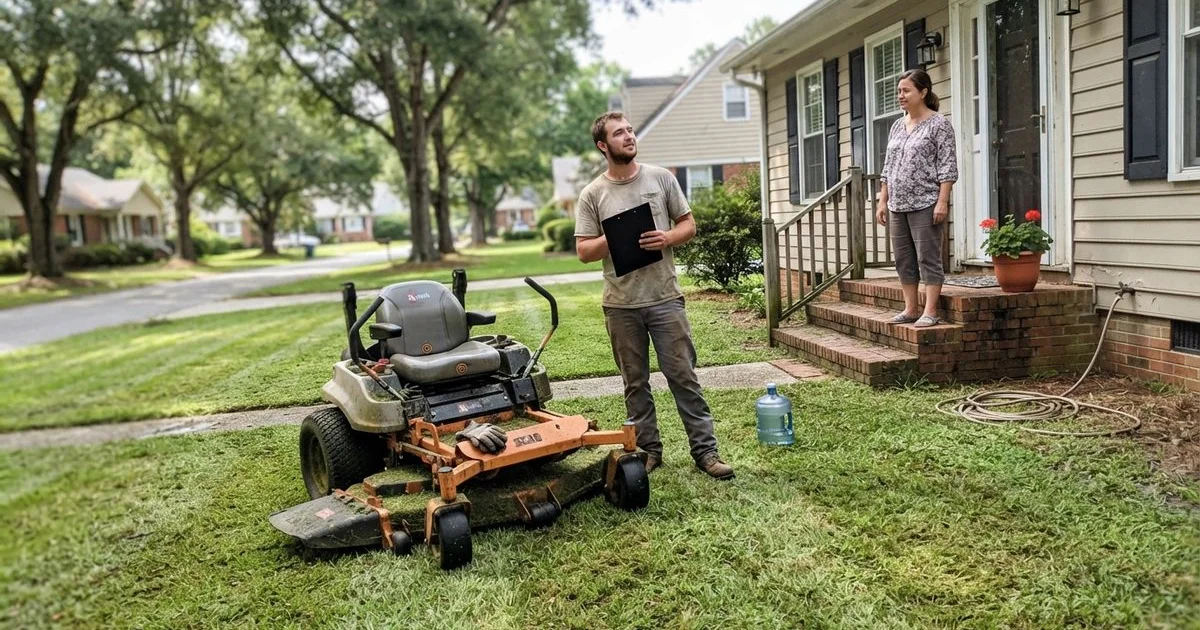
Mowing frequency is the single biggest lever on your lawn care bill, more than lot size in most cases. A quarter-acre lot mowed weekly can cost more over a season than a half-acre lot mowed monthly, simply because of how many times the crew shows up. Understanding how frequency and price connect helps you pick a schedule that fits your lawn’s actual growth rate instead of just taking whatever a company defaults to.
Why frequency moves the price more than size
Every mowing visit has a baseline cost: getting the crew and equipment to your property, unloading, and doing the walk-through. That cost repeats with every visit, so a weekly schedule multiplies it far more over a season than a monthly one. Meanwhile, the actual mowing time on a given lot barely changes visit to visit. That’s why frequency, not just square footage, is the number that moves your seasonal total the most.
What a typical Lexington schedule looks like
Most lawns here need weekly mowing from roughly April through October, when Bermuda, centipede, and zoysia grass are all actively growing in the Midlands heat and humidity. As growth slows heading into late fall, many homeowners drop to biweekly, and some lawns can go monthly or even pause entirely once grass goes dormant in winter. Fescue lawns, which some Lexington yards use for a greener winter look, behave a bit differently and may need attention later into the fall than warm-season grasses.
| Schedule | Best for | What you’re trading off |
|---|---|---|
| Weekly | Peak growing season (April to October) | Highest cost per season, healthiest cut |
| Biweekly | Shoulder seasons, slower-growing lawns | Lower cost, more clippings per visit |
| Monthly | Winter dormancy, low-maintenance yards | Lowest cost, minimal upkeep between cuts |
Mowing biweekly or monthly during the growing season
It’s tempting to save money by stretching visits out during peak season, but there’s a real tradeoff. Cutting off more than about a third of the blade height in one pass stresses the grass and can leave a scalped, uneven look, especially on lawns with any slope or shade variation. If cost is the main driver, ask about reducing add-ons like bed edging or blowing frequency before cutting the mowing schedule itself, since that often protects lawn health while still trimming the bill.
Getting an accurate quote
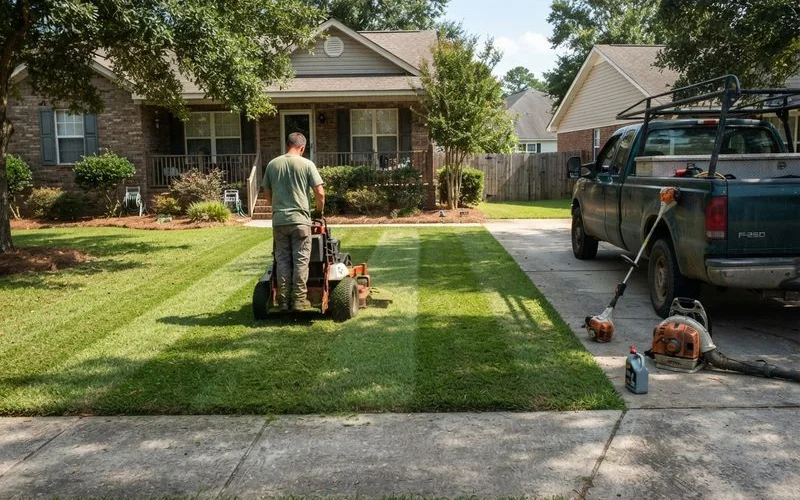
When you call for a quote, be specific about what you want included, not just how often you want the crew out. Ask whether the price covers edging along walks and beds, blowing clippings off driveways and patios, and bagging versus mulching clippings back into the lawn. Confirm how the company handles rain delays, since a missed weekly visit that gets pushed to the following week can mean a heavier, more time-consuming cut. If your lot has slopes, mature trees, or a lot of beds to trim around, mention that upfront, since it affects both time on-site and price.
Comparing per-visit pricing versus a flat monthly rate
Some companies charge per visit, which is straightforward but means your bill shifts with the season as frequency changes. Others offer a flat monthly rate averaged across the year, which smooths out the cost but can mean paying a similar amount in slow winter months as you do during peak summer growth. Neither is inherently better, but knowing which structure you’re agreeing to helps you budget accurately rather than being surprised by a bill that jumps in April.
What locks in a lower rate long term
Crews tend to price a known, ongoing relationship more favorably than a series of one-off visits, since predictable routes and repeat business reduce their own overhead. If you’re planning to stick with a lawn care company for the season, ask whether committing to a set schedule upfront, rather than booking visit by visit, gets you a better rate. Many companies are willing to work with you on this, especially for a full growing season commitment.
Our lawn care cost estimator lets you plug in your lawn size, frequency, and terrain complexity to get a realistic monthly range before you start calling around, and you can request quotes from local providers once you know what schedule fits.
For the fuller range of what companies in this category offer beyond mowing, from fertilization to full turf recovery programs, see our lawn care & maintenance category, or start from our full directory if you’re comparing across service types. If you want to understand how we score and rank the providers in this directory, our methodology explains the process.
FAQ
- Is weekly mowing worth the extra cost over biweekly?
- In peak growing season, usually yes. Grass here grows fast enough in late spring and summer that biweekly mowing means cutting more than a third of the blade length at once, which stresses the lawn and leaves visible clumps. Weekly keeps the lawn healthier and the cleanup lighter each visit.
- Why does my mowing quote change between seasons?
- Growth rate drives visit frequency, and frequency drives the bill. Most companies scale back to biweekly or monthly in winter because the grass simply isn't growing fast enough to need weekly cuts, so your seasonal total is lower even on the same contract.
- Do I save money with a year-round contract instead of paying per visit?
- Often, since a locked-in contract lets the company plan routes and staffing, and some pass a chunk of that savings to you. Ask whether a year-round agreement includes off-season visits at a reduced rate compared to booking mowing one-off through winter.
- What's included in a standard mowing visit versus an add-on?
- Mowing usually includes cutting, edging along walks and beds, and blowing clippings off hard surfaces. Bed weeding, mulch refreshes, and shrub trimming are commonly billed separately unless your contract specifically bundles them.
Related on this site
- Browse lawn care & maintenance providers
- Best lawn care & maintenance in Lexington, SC →
- Seasonal lawn care calendar for Lexington, SC
- Lawn care in Lexington: when to DIY and when to hire a pro
- What landscaping really costs in Lexington, SC
- Irrigation repair costs, and when to replace instead of repair
- All guides →