
What to expect from a commercial landscaping contract in Lexington
By Petra Kowalski · Updated 2026-07-14
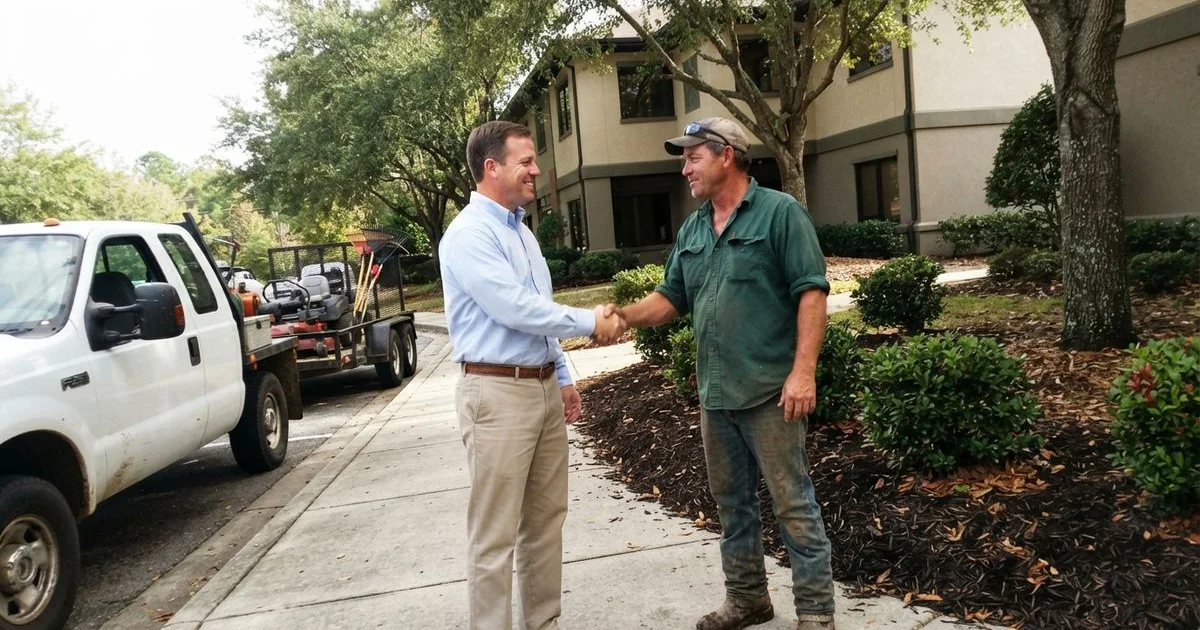
Commercial landscaping contracts cover more ground than a residential mowing agreement, both literally and in terms of what needs to be in writing. A property manager, HOA board, or business owner signing one should expect a document that spells out scope, schedule, liability, and what happens when something doesn’t go as planned, not just a price per visit.
Scope of work: get it specific
A vague scope like “grounds maintenance” leaves too much open to interpretation. The contract should itemize exactly what’s included: mowing frequency, edging, bed maintenance, mulch refreshes, irrigation checks, seasonal color rotations if applicable, and any pest or fertilization programs. If tree work, drainage fixes, or hardscape repairs come up separately, the contract should be clear about whether those are covered or billed as additional work. For a one-time design or installation project rather than an ongoing maintenance contract, our guide on what to expect from a landscape design and installation project walks through that process step by step.
Schedule and seasonal adjustments
Commercial contracts should specify not just how often service happens, but how the schedule shifts with the seasons, since a property that needs weekly mowing in summer typically needs far less in winter. Ask whether the contract price reflects that seasonal shift automatically or whether it’s a flat rate year-round.
Insurance and liability terms
Commercial properties carry more exposure than residential ones, from foot traffic to nearby structures and parking areas. The contract should reference the landscaper’s general liability and workers’ compensation coverage, and it’s reasonable to request a certificate of insurance as a standard part of onboarding, not something you have to chase down later.
Response time for urgent issues
Scheduled visits don’t cover everything. An irrigation leak, storm damage, or a hazard in a parking lot or walkway needs a faster response than the next scheduled mow. Ask specifically how the company handles urgent, unscheduled requests and whether there’s a stated response window, especially if the property sees regular foot traffic.
Damage, complaints, and termination
The contract should spell out how property damage claims get handled, how service complaints are addressed, and what the process looks like if either side wants to end the agreement early. Vague language here tends to surface as a problem later, usually at the worst time.
| Contract element | Why it matters |
|---|---|
| Itemized scope of work | Prevents disputes over what’s included |
| Seasonal schedule adjustments | Keeps pricing aligned with actual service level |
| Insurance certificate | Confirms coverage before work starts, not after an incident |
| Urgent response terms | Covers gaps between scheduled visits |
| Damage/complaint process | Gives a clear path when something goes wrong |
| Termination terms | Avoids being locked into a poor-fit contract |
Getting references that actually apply
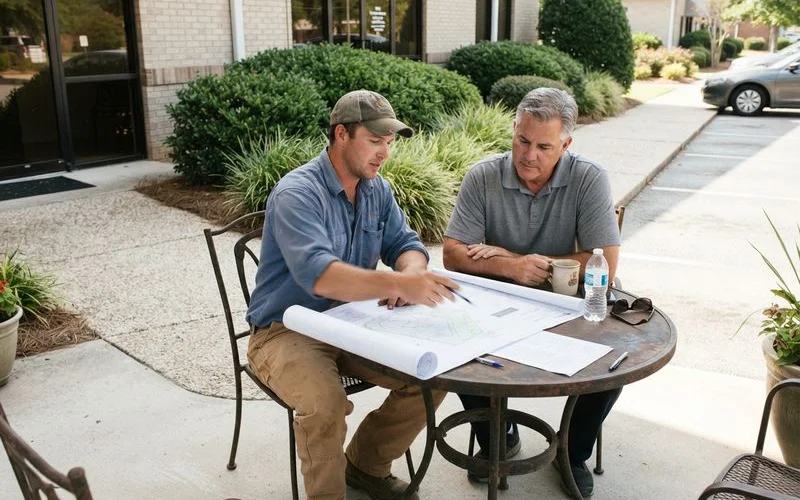
Ask to see current commercial accounts you can drive by rather than relying on photos alone, since commercial-grade work at scale looks different from a single residential yard. Confirm the crew uses commercial equipment and that the same standards apply across every property they service, not just their best-known accounts.
Who signs off, and who’s the day-to-day contact
Larger properties, HOAs, and multi-building sites benefit from naming a single point of contact on both sides: someone at the landscaping company who owns the account, and someone on your side who approves changes or additional work. Without this, small decisions can stall waiting on the wrong person, or worse, get approved by someone without authority to sign off on added cost. Put both contacts in the contract itself so there’s no ambiguity when a decision needs to move fast.
Reviewing performance during the contract term
A one-year agreement shouldn’t mean silence until renewal. Build in a periodic check-in, quarterly is common, to walk the property together, flag anything that’s slipping, and confirm the scope still matches what the property actually needs. Properties change over a year: new plantings mature, drainage patterns shift after a wet season, and what worked at signing may need adjusting well before the contract is up for renewal.
Compare local companies that handle commercial-scale work in our commercial landscaping category, or browse the full directory for other service types. Request quotes once you’ve narrowed down your options, and see our methodology for how we evaluate the companies listed here.
FAQ
- How long is a typical commercial landscaping contract?
- Many run seasonal or annual, since that lets the landscaper plan crew schedules and pricing around your property year-round rather than pricing each visit separately. Ask what's standard for the scope you need before assuming a full-year commitment is required.
- What insurance should a commercial landscaper carry?
- At minimum, general liability insurance and workers' compensation coverage. Ask for a certificate of insurance directly rather than taking a verbal assurance, since commercial properties carry more liability exposure than a typical residential yard.
- Should the contract specify response time for urgent issues?
- Yes. A contract that only covers scheduled visits leaves a gap for things like an irrigation leak or storm damage between visits. Ask how the company handles urgent, unscheduled issues and get that response expectation in writing.
- What happens if we're not satisfied with the crew's work?
- A good contract spells out how complaints get addressed, whether that's a re-service guarantee, a point of contact for issues, or a process for requesting a different crew. Vague or missing language here is worth pushing back on before signing.