
Helping an aging parent or senior keep up with their yard
By Petra Kowalski · Updated 2026-07-16
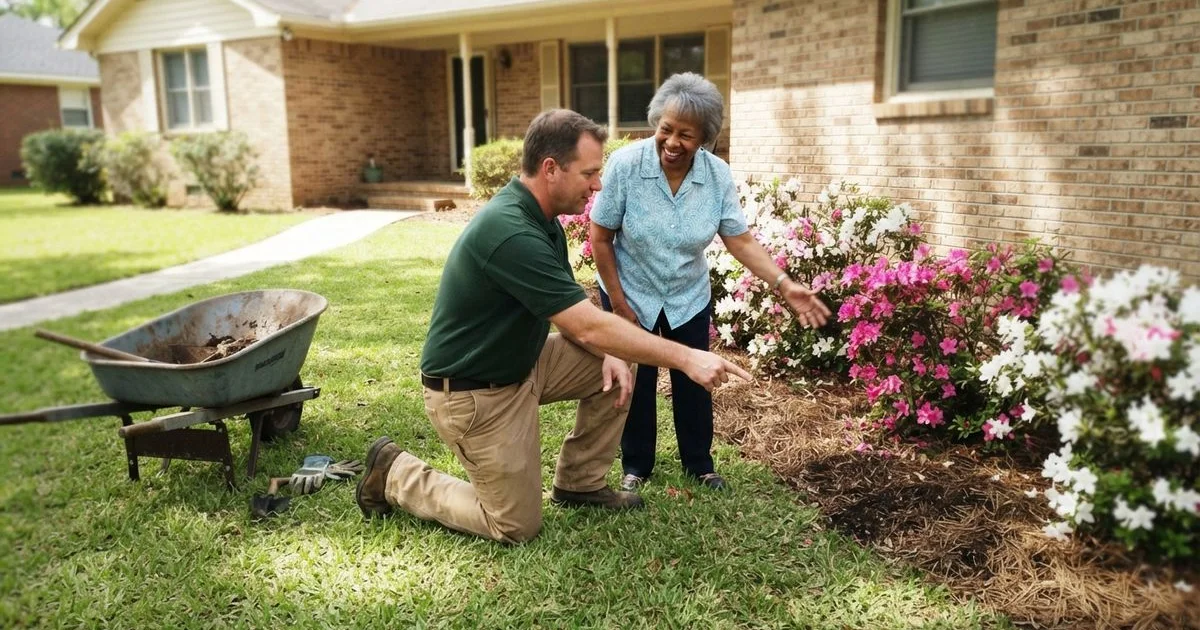
For a lot of families, yard work becomes one of the first visible signs that a parent needs some extra support, well before anything more serious comes up. It’s often not about ability so much as risk: heat, uneven ground, ladders, and heavy equipment all carry more consequence for an older adult than they used to. Setting up reliable yard help can be a low-friction way to reduce that risk while letting your parent stay in the home they want to stay in.
Starting the conversation
This is often the hardest part, more than finding a landscaper. Framing the conversation around time and enjoyment, rather than capability, tends to go over better. Instead of “you shouldn’t be doing this anymore,” something like “I’d love for you to have more time to just enjoy the yard instead of maintaining it” tends to be received as care rather than a judgment.
What to prioritize handing off first
Not every task needs to go to a professional right away. The highest-risk tasks are usually the best place to start:
- Mowing, especially on any slope or uneven ground, where a fall risk is highest.
- Anything involving a ladder, like gutter cleaning or pruning taller shrubs and trees.
- Heavy lifting or equipment use, like bags of mulch, edging equipment, or power tools.
- Extended time in summer heat, since heat-related illness risk increases significantly with age.
Lighter tasks, like watering containers, light deadheading, or short spells of hand-weeding, are often fine for your parent to keep doing if they enjoy it, as long as it’s not during the hottest part of the day.
Setting up help, even from a distance
If you don’t live nearby, most landscaping companies can work directly with you as the point of contact for billing and scheduling, while coordinating day-of visits with your parent or a local contact like a neighbor. Set this up explicitly when you first call a company, and make sure your parent knows who’s coming and roughly when, so an unfamiliar crew showing up doesn’t cause confusion or concern.
| Task | Risk level for seniors | Good first task to hand off? |
|---|---|---|
| Mowing (especially slopes) | High | Yes |
| Ladder work (gutters, tall pruning) | High | Yes |
| Heavy lifting, power equipment | Moderate to high | Yes |
| Light watering, deadheading | Low | Often fine to keep, if enjoyed |
| Extended time in summer heat | Increases with age | Limit regardless of task |
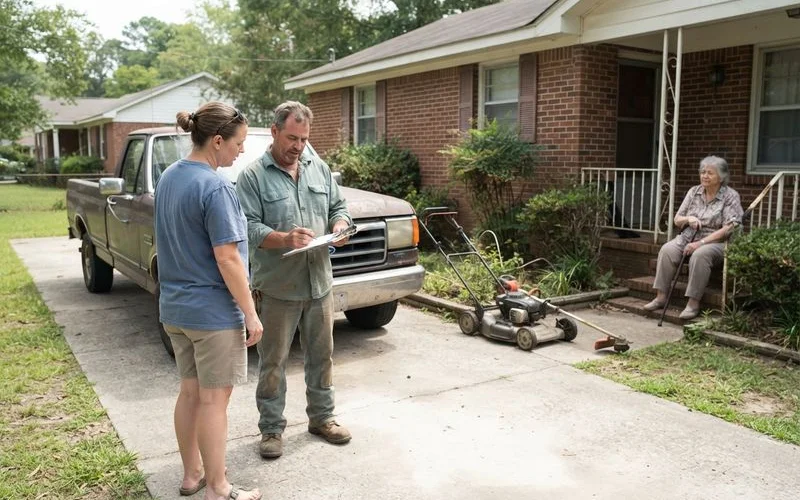
Keeping some ownership, not just outsourcing everything
For a lot of older adults, the yard is a source of pride and routine, not just a chore. Where it makes sense, look for ways to keep them involved rather than removing yard work entirely: picking out plants for a bed a crew installs, or continuing light tasks they genuinely enjoy while handing off the physically demanding parts. This tends to make the transition feel like support rather than a loss of independence.
Checking in on the yard as a wellness signal
Once regular yard care is in place, it can double as an early-warning system for other needs. A crew that visits weekly or biweekly often notices changes around the property, like mail piling up, an unusual mess, or something out of place, before family members do. If you set up ongoing service, it’s worth asking the company to flag anything that seems off, not as a formal check-in service, but simply because they’re already there and paying attention.
Making the arrangement easy to adjust
Needs change, sometimes quickly. Choose a company and a service agreement that don’t lock your parent into a rigid, hard-to-change contract, so you can scale service up if a health situation changes, or scale back if your parent recovers ability and wants to take some tasks back themselves. A flexible, month-to-month arrangement is often worth more than a slightly better rate on a long-term contract, especially early on while you’re still figuring out what level of help actually fits.
To find and set up ongoing lawn care, browse our full directory of local landscapers, and request quotes to compare a few options before committing. Our methodology explains how we evaluate and score the companies listed here.
FAQ
- How do I bring up hiring yard help without upsetting my parent?
- Framing it around safety and time rather than ability tends to land better. Something like wanting them to have more time to enjoy the yard, or concern about heat and uneven ground, often goes over more smoothly than suggesting they can't handle it anymore.
- What yard tasks are riskiest for older adults to do themselves?
- Ladder work, anything involving a chainsaw or heavy equipment, and tasks in extreme heat are the biggest concerns, since falls and heat-related illness are real risks. Routine tasks like light watering or deadheading flowers are usually fine to continue if your parent enjoys them.
- Can I set up and pay for a lawn service remotely if I don't live nearby?
- Yes, most companies can bill and communicate directly with whoever is paying, even if that's an adult child living elsewhere. Set up the arrangement directly with the company and give them a local contact, like a neighbor, for day-of coordination if needed.
- Should I look for a company with experience working with seniors specifically?
- It's not a formal specialty most companies advertise, but it's worth asking how they handle communication and whether they're comfortable coordinating with an adult child instead of, or in addition to, the homeowner directly.